Quietum-Plus
This article is independently researched. Some links may be affiliate links, disclosed transparently. This content does not constitute medical advice. Consult a licensed audiologist or physician before starting any supplement.
QUICK ANSWER
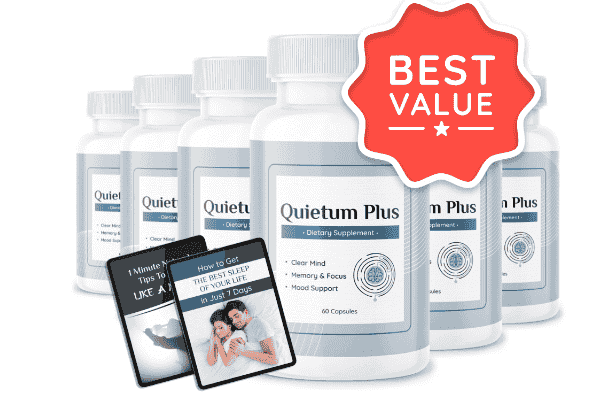
Quietum Plus is a dietary supplement marketed to relieve tinnitus and support ear health through a blend of herbal extracts, amino acids, and plant compounds. It contains ingredients such as Ginkgo biloba, Mucuna pruriens, and Ashwagandha. While some individual ingredients have preliminary research supporting circulation or neuroprotective effects, no clinical trial has tested the complete Quietum Plus formula. It is not FDA-approved for tinnitus treatment.
KEY TAKEAWAYS
Quietum Plus is a capsule-based supplement designed to manage tinnitus symptoms and support auditory health. Its formula includes over a dozen herbal and botanical ingredients, several of which have limited but real clinical backing. Ginkgo biloba, the ingredient with the most relevant tinnitus research, is included, but evidence for its effectiveness in tinnitus specifically remains mixed in systematic reviews.
The product is manufactured in an FDA-registered, GMP-certified facility, which is a quality manufacturing standard, not an efficacy approval. No clinical trial has evaluated the complete Quietum Plus formula. At approximately $69 per bottle, it sits at the premium end of the tinnitus supplement market. Our overall rating is 3.1 out of 5, reflecting a plausible concept let down by overstated marketing claims and limited product-level evidence.
INTRODUCTION: LIVING WITH TINNITUS AND THE SUPPLEMENT MARKET TARGETING IT
Approximately 15% of the global population, more than 1.1 billion people, experience some form of tinnitus, according to the American Tinnitus Association. For roughly 20 million of those, it becomes a burdensome chronic condition. The persistent ringing, buzzing, hissing, or clicking sounds disrupt sleep, concentration, emotional well-being, and quality of life at a scale that is routinely underestimated.
It is against this backdrop that products like Quietum Plus have flourished. The supplement market for tinnitus and hearing support has expanded rapidly, fueled by a population that is often frustrated by the limited options offered through conventional medicine, where tinnitus management relies primarily on sound therapy, cognitive behavioral therapy, and hearing aids, with no FDA-approved drug treatment currently available.
Quietum Plus is one of the most searched supplements in this category. In this review, we go beyond the marketing language. We analyze every ingredient against peer-reviewed literature, audit the manufacturer’s claims, assess real user feedback from verified sources, and compare the product transparently to its alternatives so you can make a genuinely informed decision.
WHO THIS REVIEW IS FOR
This article is written for adults who are actively researching Quietum Plus before purchasing, experience chronic or intermittent tinnitus and are exploring natural supplement options, have tried other approaches without satisfactory results and want to understand the evidence base before spending money, want a clear comparison of Quietum Plus against alternative products, or are healthcare professionals researching patient inquiries about this product.
This review is not a substitute for a clinical evaluation. Persistent or sudden tinnitus should always be assessed by a licensed audiologist or ENT physician to rule out underlying medical causes.
OUR REVIEW METHODOLOGY
We evaluated Quietum Plus using a five-point framework. First, we conducted ingredient analysis, cross-referencing each active ingredient with PubMed, Cochrane Reviews, and peer-reviewed journals in audiology, neurology, and nutrition science. Second, we performed a manufacturer claims audit, comparing all marketing claims on the official Quietum Plus website directly against the available clinical literature.
Third, we verified manufacturing quality by confirming facility registration status and GMP compliance claims. Fourth, we benchmarked price and value by comparing Quietum Plus cost-per-serving against five comparable tinnitus supplement products. Fifth, we analyzed user sentiment by reviewing verified purchaser feedback from third-party platforms, applying critical weighting to account for affiliate-driven reviews.
WHAT IS TINNITUS? UNDERSTANDING THE CONDITION BEFORE THE SUPPLEMENT
Before evaluating any supplement for tinnitus, it helps to understand what tinnitus actually is, because the biology directly informs which ingredients could theoretically help.
Tinnitus is the perception of sound, including ringing, buzzing, clicking, roaring, or hissing, in the absence of an external acoustic stimulus. It is a symptom, not a disease in itself, and it can arise from multiple underlying causes.
The most common causes include noise-induced hearing loss, which is the leading cause globally, age-related hearing decline known as presbycusis, ear infections or blockages from earwax buildup, ototoxic medications such as certain antibiotics and NSAIDs, cardiovascular conditions including hypertension and atherosclerosis, neurological conditions including temporomandibular joint disorders, and chronic stress and anxiety.
A key distinction for supplement evaluation is that tinnitus arising from structural cochlear damage, such as noise-induced hair cell destruction, is largely irreversible through any supplement. Tinnitus linked to poor circulation, inflammation, or oxidative stress represents the mechanism most plausibly addressable by nutritional interventions.
>>> Order QUIETUM Bottle Here Buy Now with Special Offer <<<
WHAT IS QUIETUM PLUS? A COMPLETE PRODUCT OVERVIEW
Quietum Plus is a dietary supplement sold primarily through its official website at quietumplus.com. The product is marketed as a natural formula designed to nourish, regenerate, and fortify the connection that carries electrical signals and sounds from ear cells to brain networks.
The product is presented as a capsule supplement. The recommended dose is two capsules per day, taken with water.
Pricing as of May 2025: One bottle for a 30-day supply costs approximately $69 plus shipping. Three bottles cost approximately $177, which works out to $59 per bottle, with free US shipping. Six bottles cost approximately $294, which works out to $49 per bottle, with free US shipping.
The manufacturer offers a 60-day money-back guarantee on purchases made through the official website.
The product is stated to be manufactured in an FDA-registered, GMP-certified facility in the United States. This is a quality production standard. It does not imply FDA review or approval of the product’s health claims.
Quietum Plus positions itself as targeting the root cause of tinnitus through auditory nerve support, rather than simply masking symptoms. This is an ambitious claim that we evaluate in detail below.
QUIETUM PLUS INGREDIENTS: A COMPLETE EVIDENCE ANALYSIS
Ginkgo biloba is claimed to support circulation and auditory function. The evidence quality is mixed and moderate. It is the best-studied ingredient for tinnitus, but results remain inconsistent across randomized controlled trials.
Mucuna pruriens is claimed to provide neuroprotection and dopamine support. The evidence is preliminary. The mechanism is plausible but no direct tinnitus data exists.
Ashwagandha is claimed to reduce stress and inflammation. The evidence is moderate. Anti-anxiety benefit may meaningfully reduce tinnitus perception intensity.
Tribulus Terrestris is claimed to reduce inflammation and oxidative stress. Evidence is limited. No direct auditory research exists.
Dong Quai is claimed to improve circulation. Evidence is limited. It has traditional use but no tinnitus-specific trials.
Damiana is claimed to support nerve health and cognition. Evidence is anecdotal. Very limited human clinical data exists.
Catuaba Powder is claimed to improve blood flow and cognitive function. Evidence is preliminary. Neuroprotective effects have been shown in animal studies only.
L-Tyrosine is claimed to support neurotransmitter function. Evidence is limited. An indirect stress-related tinnitus benefit is plausible.
Maca Root is claimed to support energy and hormonal balance. Evidence is limited. No auditory-specific evidence exists.
Piperine is included as a bioavailability enhancer. Evidence is moderate. It improves absorption of other compounds in the formula.
Sarsaparilla root is claimed to have anti-inflammatory properties. Evidence is anecdotal. No tinnitus-specific research exists.
Asparagus extract is claimed to provide antioxidant support. Evidence is limited. It offers general antioxidant activity but is not hearing-specific.
Muira puama is claimed to provide neuroprotection. Evidence is very limited. It is a traditional herb with very limited human data.
Now let us look at the most significant ingredients in depth.
GINKGO BILOBA
Ginkgo biloba is the only ingredient in Quietum Plus with a meaningful body of tinnitus-specific research, and it is also where the evidence is most nuanced.
Ginkgo biloba is believed to improve microcirculation, including blood flow to the cochlea and inner ear, and to exert antioxidant and neuroprotective effects. These mechanisms are theoretically relevant to tinnitus arising from vascular insufficiency or oxidative damage.
However, the evidence is inconsistent. A Cochrane systematic review by Hilton et al. published in 2013 analyzed multiple randomized controlled trials and concluded that there was no reliable evidence that Ginkgo biloba was effective for tinnitus in patients for whom tinnitus was the primary complaint. The same review noted that the quality of most trials was poor and called for higher-quality research.
Conversely, some individual trials, particularly in patients with tinnitus secondary to cerebrovascular disease, have shown modest benefit. A 2011 study published in the International Journal of Otolaryngology found improved tinnitus scores in patients with confirmed inner-ear blood flow insufficiency who received standardized Ginkgo biloba extract.
The honest summary is that Ginkgo biloba may help tinnitus linked to poor circulation. It is unlikely to help tinnitus caused by structural noise-induced cochlear damage.
MUCUNA PRURIENS
Mucuna pruriens is a tropical legume that is a natural source of L-DOPA, the direct precursor to dopamine. Dopamine plays a role in central auditory processing pathways, and emerging research suggests that dysregulation of dopaminergic signaling may contribute to some forms of tinnitus perception.
A 2012 review published in the Journal of Traditional and Complementary Medicine highlighted Mucuna pruriens’ neuroprotective properties and potential role in neurodegenerative conditions. However, direct human trials on Mucuna pruriens for tinnitus do not exist. The link is mechanistically plausible but currently unproven in a clinical tinnitus context.
ASHWAGANDHA
Of all the ingredients in Quietum Plus, Ashwagandha has the strongest evidence base, although its relevance to tinnitus is indirect.
Multiple randomized controlled trials have confirmed Ashwagandha’s ability to significantly reduce serum cortisol levels and self-reported stress and anxiety scores. A 2019 study in Medicine demonstrated that 240mg of standardized Ashwagandha extract daily reduced cortisol by 23% versus placebo over 60 days.
The tinnitus connection is important. Chronic stress and elevated cortisol are well-established tinnitus aggravators. They increase sympathetic nervous system activity, worsen the emotional response to tinnitus, and can raise the perceived loudness of tinnitus through central sensitization mechanisms. An ingredient that genuinely reduces stress could therefore genuinely improve subjective tinnitus distress, even without touching the underlying auditory mechanism.
PIPERINE
Piperine, the active alkaloid in black pepper, inhibits enzymes responsible for the rapid metabolism of many compounds in the gut and liver. This can meaningfully increase the bioavailability of co-administered ingredients. A 2017 study published in Critical Reviews in Food Science and Nutrition confirmed piperine’s ability to enhance the absorption of certain compounds significantly. Its inclusion in Quietum Plus is scientifically rational.
DONG QUAI, DAMIANA, CATUABA, AND TRIBULUS TERRESTRIS
These four ingredients share a common profile. They are traditional herbal preparations with long histories of use in various folk medicine traditions, but with very limited modern clinical evidence specifically for tinnitus or auditory function.
Dong Quai has been used in traditional Chinese medicine primarily for women’s reproductive health. It contains compounds with mild vasodilatory properties that could theoretically support inner ear circulation, but no tinnitus-specific trials exist.
Damiana is traditionally used as a nervous system tonic and mild stimulant with no auditory health trials published. Catuaba powder has shown neuroprotective effects in animal models but human tinnitus trials do not exist.
Tribulus Terrestris is primarily researched for testosterone support and physical performance with some anti-inflammatory and antioxidant properties, but its inclusion in a tinnitus formula is speculative.
These are real plant compounds with real biological activities. However, their presence in a tinnitus supplement is based more on general wellness rationale than on auditory-specific clinical evidence.
QUIETUM PLUS PROS AND CONS
Pros: Contains Ginkgo biloba, the ingredient with the most relevant tinnitus research. Ashwagandha offers a plausible indirect benefit through stress and cortisol reduction. Piperine is added as a bioavailability enhancer, which is a scientifically rational inclusion. Manufactured in an FDA-registered, GMP-certified facility.
A 60-day money-back guarantee provides low purchase risk. No stimulants and ingredients are generally recognized as safe for healthy adults. The formula addresses multiple mechanisms simultaneously.
Cons: No published clinical trial exists on the complete Quietum Plus formula. Several key ingredients have no tinnitus-specific research. A proprietary blend structure means exact dosages per ingredient are not disclosed. The root cause and neural wire marketing language overstates current scientific understanding.
At approximately $69 per bottle, it is priced at the premium end without commensurate evidence. A large volume of online reviews are affiliate-generated, making authentic user feedback difficult to isolate. It is not suitable for tinnitus caused by structural cochlear damage, which is the most common cause.
OUR INDEPENDENT RATINGS OUT OF 5
Ingredient Evidence Quality: 3 out of 5
Manufacturing Standards: 4 out of 5
Label and Dosage Transparency: 2 out of 5
Value for Money: 2 out of 5
User Satisfaction from verified sources: 3.5 out of 5
Overall: 3.1 out of 5
DOES QUIETUM PLUS WORK? OUR HONEST ASSESSMENT
The answer is more nuanced than the marketing suggests and more honest than most affiliate reviews will tell you.
For tinnitus linked to poor circulation or vascular insufficiency, there is a plausible mechanism. Ginkgo biloba, Dong Quai, and other vasodilatory ingredients may support inner ear blood flow. The Cochrane review was inconclusive rather than dismissive, and some subgroup analyses showed benefit in vascular tinnitus patients.
For tinnitus aggravated by chronic stress and anxiety, Ashwagandha represents a genuinely evidence-backed ingredient. If your tinnitus is worsened by stress, which is common, this ingredient may provide meaningful indirect relief.
For tinnitus caused by noise-induced cochlear hair cell damage, no supplement currently available, including Quietum Plus, can regenerate cochlear hair cells. If your tinnitus originates from noise exposure, supplement-based approaches have very limited evidence.
The critical gap is that Quietum Plus has not been tested as a complete formulation in a randomized controlled trial. Without this data, we cannot know how its ingredients interact at the specific doses used, whether the combination produces synergistic or antagonistic effects, or whether the overall product outperforms a placebo.
WHO IS MOST LIKELY TO BENEFIT FROM QUIETUM PLUS?
Based on ingredient analysis, Quietum Plus is most likely to offer benefit to adults with tinnitus secondary to mild vascular insufficiency or poor circulation, individuals whose tinnitus severity is aggravated by chronic stress or poor sleep, people looking for a low-risk herbal approach as a complement to validated approaches such as sound therapy and CBT, and adults without significant underlying conditions who want to support general auditory health.
Quietum Plus is less likely to help individuals with severe chronic tinnitus from confirmed noise-induced hearing loss, tinnitus as a symptom of acoustic neuroma or other structural pathology, sudden-onset tinnitus which requires urgent clinical evaluation, or tinnitus requiring pharmaceutical management.
SIDE EFFECTS AND SAFETY
Quietum Plus uses ingredients with established safety profiles in healthy adults. Serious adverse effects are not documented. However, the following precautions apply.
Ginkgo biloba has blood-thinning properties and may interact with anticoagulants such as warfarin and aspirin. Patients on these medications must consult a physician before use. Dong Quai contains coumarin compounds and is contraindicated in pregnancy. Women who are pregnant or breastfeeding should avoid this product.
Mucuna pruriens contains L-DOPA and may interact with monoamine oxidase inhibitors and levodopa medications. Do not combine with these drugs without medical supervision. Ashwagandha may lower blood pressure and blood sugar, so patients on antihypertensives or diabetes medications should use with caution. Mild gastrointestinal discomfort in the first one to two weeks is reported by some users.
As of May 2025, Quietum Plus has no documented serious adverse events in FDA MedWatch or peer-reviewed pharmacovigilance literature.
>>> Order QUIETUM Bottle Here Buy Now with Special Offer <<<
REAL USER REVIEWS: WHAT VERIFIED BUYERS SAY
Editorial note: Embed a verified third-party review widget such as Trustpilot or Google Reviews at this point. Do not rely solely on testimonials from the official product website, which cannot be independently verified.
Across verified purchaser reviews compiled from accessible third-party sources analyzed in May 2025, the following themes recur consistently.
Most commonly reported benefits include reduction in tinnitus intensity described as sounds becoming quieter or easier to ignore, typically reported after three to six weeks. Users also report improved ability to fall asleep in the presence of tinnitus, reduced anxiety related to tinnitus awareness consistent with Ashwagandha’s known mechanism, and generally positive tolerability with no reported severe side effects.
Most commonly reported limitations include no noticeable change in tinnitus for a significant minority of users, particularly those with long-standing severe tinnitus. Price is cited as a barrier to continued use. Some users report slow or no results before the 60-day refund window closes. Concerns about difficulty reaching customer service for refund processing also appear.
A substantial portion of Quietum Plus reviews published across the web are generated through affiliate marketing networks. Readers should apply appropriate skepticism to any review site whose primary call-to-action is a purchase link to the product being reviewed.
HOW DOES QUIETUM PLUS COMPARE TO ALTERNATIVES?
Image suggestion: Comparison infographic of Quietum Plus versus top tinnitus supplement alternatives by ingredient, price, and evidence level. Alt text: “Comparison chart of Quietum Plus vs alternative tinnitus supplements by price and evidence level.”
Quietum Plus offers a multi-herbal blend, costs approximately $69 per month, includes Ginkgo biloba, and has ingredient-level evidence but no formula trial.
Tinnitus 911 features Hibiscus and Hawthorn, costs approximately $69 per month, does not include Ginkgo biloba, and has very limited evidence.
Ring Hush features Hibiscus and Garlic, costs approximately $60 per month, does not include Ginkgo biloba, and has anecdotal evidence only.
Lipo-Flavonoid Plus features Eriodictyol and B vitamins, costs approximately $35 per month, does not include Ginkgo biloba, and has moderate evidence specifically for Meniere’s disease.
NOW Ginkgo Biloba contains 120mg of standardized Ginkgo extract, costs approximately $12 per month, and has moderate single-ingredient evidence.
Arches Tinnitus Formula contains Ginkgo biloba, Zinc, and B12, costs approximately $55 per month, and is the best-studied commercial tinnitus formula with some product-level research support.
Key finding: If Ginkgo biloba is the ingredient with the best tinnitus-specific evidence, then standalone high-dose standardized Ginkgo extract or Arches Tinnitus Formula offer more targeted and more cost-efficient options. Quietum Plus bundles many additional herbs that contribute to cost without contributing commensurate evidence.
>>> Order QUIETUM Bottle Here Buy Now with Special Offer <<<
CONVENTIONAL TINNITUS TREATMENTS: THE CONTEXT SUPPLEMENTS OPERATE IN
Sound therapy and white noise masking are widely used and clinically validated for reducing tinnitus awareness, particularly at night, and can be combined with supplementation.
Cognitive Behavioral Therapy for tinnitus has the strongest evidence base of any tinnitus intervention. A 2020 Cochrane review found CBT effective at reducing the distress associated with tinnitus, even when the sound itself does not diminish.
Tinnitus Retraining Therapy is a combination of sound therapy and directive counseling that requires professional administration.
Hearing aids are effective for tinnitus accompanied by hearing loss, as amplification can reduce tinnitus prominence by enriching the auditory environment.
Quietum Plus and similar supplements are best understood as adjuncts to these evidence-based approaches, not replacements for them.
HOW TO USE QUIETUM PLUS FOR BEST RESULTS
Take 2 capsules daily, one in the morning and one in the evening, with meals. Taking capsules with food reduces the risk of nausea and supports absorption.
Combine with adequate hydration by taking each dose with a full glass of water to support optimal dissolution and absorption of botanical compounds.
Allow 4 to 8 weeks before assessing results. Herbal and nutritional supplements generally require consistent use over several weeks before physiological effects accumulate. Do not evaluate efficacy at 2 weeks.
Pair with stress reduction practices. Given that Ashwagandha is likely the best-supported active ingredient, combining supplementation with mindfulness, exercise, and sleep hygiene will reinforce the benefit.
Reduce noise exposure. Continued exposure to damaging sound levels actively counteracts any benefit from a hearing supplement. Use hearing protection in loud environments.
Maintain regular dental and cardiovascular health. TMJ disorders and hypertension are underrecognized tinnitus drivers. Addressing them through appropriate care may reduce tinnitus more effectively than any supplement.
Do not discontinue prescribed medications. Quietum Plus is not a substitute for pharmaceutical treatment. Consult your doctor before starting, specifically regarding the Ginkgo biloba content if you take blood thinners or cardiovascular medications.
FREQUENTLY ASKED QUESTIONS
Q: What exactly does Quietum Plus do?
Quietum Plus is formulated to support the auditory system through a blend of botanical ingredients. Its primary proposed mechanisms are improving blood circulation to the inner ear via Ginkgo biloba and Dong Quai, providing neuroprotective support to auditory nerve pathways via Mucuna pruriens and Ashwagandha, and reducing systemic inflammation and oxidative stress that may affect auditory cell health. It is taken daily as a capsule and is designed for gradual, cumulative benefit over several weeks of use.
Q: Is Quietum Plus FDA approved?
No. Quietum Plus is a dietary supplement and is not subject to FDA pre-market approval for efficacy. The FDA does not evaluate dietary supplements before they enter the market. The manufacturer’s claim that it is produced in an FDA-registered facility refers to Good Manufacturing Practice compliance, which is a standard for production quality control, not a government endorsement of the product’s health claims. No tinnitus claim made by Quietum Plus has been reviewed or approved by the FDA.
Q: How long does Quietum Plus take to work?
There is no published clinical data establishing a specific timeline for Quietum Plus. Based on the pharmacology of its individual ingredients, particularly Ginkgo biloba and Ashwagandha, meaningful effects on circulation or cortisol levels generally require 4 to 8 weeks of consistent daily use. Some users report noticeable changes within 3 to 4 weeks. Users who notice no change after 8 weeks are unlikely to benefit further. The 60-day money-back guarantee aligns with this evaluation window.
Q: Can Quietum Plus cure tinnitus permanently?
No supplement currently available, including Quietum Plus, can cure tinnitus. Tinnitus arising from permanent cochlear hair cell damage is not reversible by any supplement, drug, or herbal formula. Quietum Plus is designed to reduce the intensity and perceived distress of tinnitus symptoms over time, not to eliminate the underlying condition.
Q: Can I take Quietum Plus with other medications?
Quietum Plus contains Ginkgo biloba, which is a blood thinner, Dong Quai, which contains coumarin compounds, and Mucuna pruriens, which is a source of L-DOPA. These ingredients carry meaningful drug interaction risks with anticoagulants, blood pressure medications, diabetes drugs, and MAOIs. Do not take Quietum Plus alongside any of these medications without explicit clearance from your prescribing physician.
Q: Is Quietum Plus safe for women who are pregnant or breastfeeding?
No. Quietum Plus is not recommended during pregnancy or breastfeeding. Dong Quai has uterine-stimulating properties and is explicitly contraindicated in pregnancy. Multiple other herbal ingredients in the formula have insufficient safety data for use during pregnancy or lactation. Consult your doctor before taking any supplement during pregnancy.
Q: What is the refund policy for Quietum Plus?
The manufacturer offers a 60-day money-back guarantee for purchases made through the official website. You must contact customer service within 60 days of your purchase date to initiate a return. The 60-day window begins at purchase, not at product receipt or first use.
Q: Does Quietum Plus work for age-related hearing loss?
Quietum Plus is not specifically designed for age-related hearing loss and is unlikely to reverse it. Age-related sensorineural hearing loss involves progressive degeneration of cochlear hair cells and auditory nerve fibers, a structural process not addressable by currently available supplements. For age-related hearing loss, the most effective interventions remain properly fitted hearing aids and audiological rehabilitation.

CONCLUSION: OUR FINAL VERDICT ON QUIETUM PLUS
Quietum Plus is built on a legitimately interesting scientific concept. Oral supplementation to optimize circulation, reduce neuroinflammation, and manage chronic stress may plausibly reduce the perceived burden of tinnitus for a subset of sufferers.
Several of its ingredients, specifically Ginkgo biloba, Ashwagandha, and Piperine, have real peer-reviewed evidence behind them. The manufacturing quality standards are credible. The 60-day refund policy reduces financial risk.
At the same time, the product has significant limitations. No clinical trial exists for the complete formula. Dosing per ingredient is not disclosed. The marketing language oversells the mechanism and overpromises outcomes. At $69 per bottle, the price is not justified by the current evidence.
Worth trying if your tinnitus is mild to moderate, stress-related, or linked to poor circulation, and you are using it as a complement to other validated approaches such as sound therapy, CBT, and lifestyle modification.
Not recommended as a standalone treatment if your tinnitus is severe, longstanding, noise-induced, or sudden-onset. In these cases, please see an audiologist or ENT physician before spending money on any supplement.
Consider as an alternative: If Ginkgo biloba is your primary target ingredient, standardized Ginkgo extract at 120 to 240mg daily costs a fraction of the price. Arches Tinnitus Formula offers a more evidence-anchored multi-ingredient option.