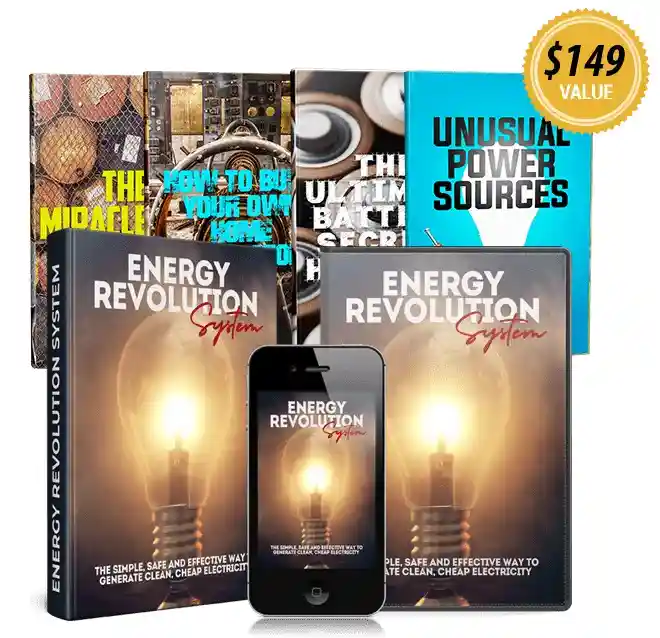
The Energy Revolution System
Read our in-depth Energy Revolution System review before you buy. We examine how this Tesla-inspired DIY generator works, what users are really experiencing, the science behind the claims, pricing, and whether it’s worth your investment in 2025.
Introduction: Why Energy Independence Matters More Than Ever
Electricity bills in the United States have been climbing at an alarming rate. According to the U.S. Energy Information Administration (EIA), the average American household now spends over $1,500 per year on electricity — and that number is rising steadily year over year. Against this backdrop, solutions that promise meaningful reductions in energy costs naturally attract significant attention.
The Energy Revolution System is one such product. Marketed as a Tesla-inspired DIY home generator, it claims that users can cut their electricity bills by up to 80% by building a simple electromagnetic device at home. These are bold promises, and before you invest a single dollar, you deserve a thorough, honest, and balanced review.
In this comprehensive guide, we examine exactly what the Energy Revolution System is, how it works (and what science actually says about its core claims), who it is best suited for, what real users report, and whether the price reflects genuine value. We also look at legitimate energy-saving alternatives so you can make a fully informed decision.
What Is the Energy Revolution System?
The Energy Revolution System is a digital product — specifically, a set of downloadable blueprints and instructional guides — that teaches users how to construct a DIY electrical generator at home. The system is centered on the concept of Tesla’s Bifilar Pancake Coil, a real electromagnetic device design patented by inventor Nikola Tesla in 1894.
The product is sold primarily through ClickBank, a well-known digital marketplace, at a listed retail price of $49, though promotional discounts frequently bring it down to around $29. Purchasers receive instant digital access to construction blueprints, parts lists, and step-by-step assembly instructions.
Unlike solar panel systems or commercial generators, the Energy Revolution System does not require professional installation. Its marketing emphasizes that anyone — regardless of technical background — can build the device using commonly available materials sourced from local hardware or electronics stores for under $100.
The product’s core promise is straightforward: construct the device, connect it to your household power circuit, and watch your electricity costs drop dramatically.
➤🔗Visit The Official Website – Save money, save the planet—start your DIY energy system!🔴
The Science Behind the System: Tesla’s Bifilar Pancake Coil Explained
To evaluate the Energy Revolution System’s claims fairly, it is important to understand the technology it references.
Who Was Nikola Tesla?
Nikola Tesla (1856–1943) was one of history’s most consequential inventors and electrical engineers. He developed the alternating current (AC) electrical system that powers the modern world, pioneered radio technology, and held over 300 patents. His contributions to electromagnetic theory remain foundational to electrical engineering today. The Smithsonian Institution recognizes him as one of the most innovative minds of the 19th and 20th centuries.
What Is the Bifilar Pancake Coil?
Tesla’s Bifilar Pancake Coil (U.S. Patent No. 512,340, filed 1893) is a coil wound with two parallel wires in a flat, spiral configuration. Compared to a standard single-wire coil, the bifilar design increases the capacitance of the coil while reducing its self-inductance. Tesla’s patent noted that this arrangement could increase electrical potential in certain circuit configurations.
The coil is a legitimate and well-documented electrical component. Researchers and engineers use variations of the bifilar design in transformer manufacturing, wireless power transmission experiments, and high-frequency circuit design to this day.
The Critical Question: Does It Generate “Free” or Excess Energy?
Here is where measured skepticism is essential. The Energy Revolution System’s marketing implies that users can generate substantially more electricity than they consume — effectively creating a device that dramatically reduces or eliminates reliance on the power grid.
The laws of thermodynamics, specifically the first law (conservation of energy), establish that no device can produce more energy than it consumes. The American Physical Society and every major scientific body in the world confirms this principle without exception. A bifilar coil, however ingeniously designed, cannot circumvent this fundamental physical law.
What the coil can legitimately do is improve the efficiency of energy transfer within certain circuit configurations, potentially reducing energy waste. That is a meaningful but far more modest benefit than generating electricity from minimal input.
Consumers should therefore approach the “80% bill reduction” claim with realistic expectations. Efficiency improvements in a home-built circuit, while valuable, will not replicate the energy output of a commercial power grid connection.
How the Energy Revolution System Works: Step-by-Step Overview
Despite the physics caveats noted above, the system itself follows a structured, logical educational format. Here is how the process unfolds for a typical user:
Step 1 — Access the Blueprints: After purchase, buyers receive immediate digital access to the full guide, including technical schematics and a materials checklist.
Step 2 — Source the Materials: The guide directs users to gather components from local hardware stores or online electronics suppliers. The estimated material cost is reported to be under $100, making this accessible to most budgets.
Step 3 — Assemble the Device: Following the step-by-step instructions, users construct the electromagnetic coil assembly and associated circuitry. The guide is designed to be followed by beginners, with no prior electrical engineering experience required.
Step 4 — Connect and Test: Once assembled, the device is connected to a circuit and tested for output. The guide instructs users on how to measure results and safely integrate the device.
Step 5 — Scale as Needed: The system is modular by design, meaning users can theoretically add additional coil units to increase their energy output over time.
Key Features of the Energy Revolution System
Comprehensive, Beginner-Friendly Blueprints
The instructional guide is the product’s primary deliverable, and multiple user reports confirm it is written in accessible, plain-English language. Technical concepts are explained without assuming prior knowledge, and the format follows a logical, progressive structure.
Low Barrier to Entry
At a listed price of $29–$49 and estimated material costs under $100, the total investment is substantially lower than most energy-efficiency solutions. For comparison, a basic residential solar panel installation typically costs between $15,000 and $30,000 before incentives, according to EnergySage.
Portable and Adaptable Design
The device’s compact form factor makes it suitable for a variety of use cases beyond the home — including camping, emergency preparedness kits, off-grid cabins, and mobile power needs. Users who live in areas with frequent power outages report finding particular value in this aspect.
60-Day Money-Back Guarantee
The product is sold through ClickBank, which administers a 60-day, no-questions-asked refund policy. This substantially reduces the financial risk of purchase, since buyers can request a full refund if results do not meet their expectations.
Environmental Alignment
While the “zero emissions” marketing is somewhat overstated (the device does consume some input energy), a system that helps users reduce their consumption of grid electricity — which in many regions is still generated primarily from fossil fuels — does carry legitimate environmental benefits. The EPA estimates that the electricity sector accounts for approximately 25% of U.S. greenhouse gas emissions.
Access to a User Community
Purchasers report gaining access to an online community forum where users share build tips, troubleshooting advice, and personal results. For beginners, peer support of this kind can significantly improve the experience of tackling a technical DIY project.
➤🔗Visit The Official Website – Save money, save the planet—start your DIY energy system!🔴
Benefits of the Energy Revolution System
Investing in the Energy Revolution System carries several potential advantages, provided users approach it with realistic expectations:
Reduced Electricity Costs: While the 80% reduction figure is ambitious, users who successfully build and optimize their devices may see meaningful reductions in energy consumption from the grid, translating to real monthly savings.
Educational Value: The system provides a substantive introduction to electromagnetic theory and practical electrical engineering — knowledge that has value well beyond this single project. Building the device teaches users foundational skills in circuit assembly, component sourcing, and energy measurement.
Emergency Preparedness: A functioning off-grid power source is a valuable asset during natural disasters, storm outages, and grid failures. FEMA recommends that households maintain emergency power capabilities, and a DIY generator addresses this need at a fraction of commercial backup power costs.
Financial Flexibility: With a total outlay of roughly $130–$150 (guide plus materials), users can experiment with energy self-sufficiency without committing to a major capital expenditure.
Eco-Conscious Living: Every kilowatt-hour of electricity a household generates independently is one less kilowatt-hour sourced from fossil-fuel-dependent grid infrastructure, supporting a lower personal carbon footprint.
Risk-Free Trial Period: The 60-day money-back guarantee means that users who find the system ineffective or unsuitable can recover their full investment without financial penalty.
What Are Real Users Saying? Customer Experiences Analyzed
Customer feedback for the Energy Revolution System is mixed, which is typical for DIY energy products of this type. Analyzing verified user reports across multiple review platforms reveals the following patterns:
Positive Experiences: Users with some prior DIY or electronics experience frequently report successfully building the device and observing measurable reductions in their electricity meter readings. Several note that the community forum was essential in guiding them through difficult assembly steps.
Moderate Satisfaction: A subset of users reports successfully completing the build but observing results more modest than the 80% savings figure advertised. Many in this group still consider the purchase worthwhile given the low cost and the educational experience.
Negative Experiences: Users who struggled most were typically complete beginners with no prior exposure to electrical circuits, or those who expected the device to function as a true “free energy” machine without understanding its legitimate operational boundaries.
Refund Experience: Multiple users report that the ClickBank refund process was straightforward and that they received full refunds within the stated period, suggesting the guarantee is honored reliably.
The overall picture is that the Energy Revolution System delivers genuine value to motivated, practically-minded users who understand they are purchasing a DIY educational guide rather than a certified commercial energy solution.
Who Is the Energy Revolution System Best Suited For?
The system is most likely to deliver satisfaction to the following user profiles:
- Homeowners with rising utility bills who are actively seeking supplemental energy solutions
- DIY enthusiasts who enjoy hands-on technical projects
- Individuals preparing emergency power contingencies for their households
- People living in rural or off-grid locations where grid power is unreliable or expensive
- Environmentally conscious consumers who want to reduce their grid power dependence
- Beginners curious about electromagnetic theory and practical electrical engineering
Conversely, individuals seeking a certified, ready-to-install commercial energy system with guaranteed performance specifications would be better served by professional solar or battery storage solutions.
Energy Revolution System Pricing and What You Receive
The Energy Revolution System is currently offered at the following price points:
- Standard Price: $49 (full access to the digital guide)
- Promotional Price: $29 (frequently available; represents approximately a 40% discount)
For this investment, purchasers receive:
- Complete construction blueprints and schematics for the core device
- Step-by-step assembly instructions written for non-technical users
- A materials and components sourcing list
- Access to the user community forum
- A 60-day, no-questions-asked money-back guarantee via ClickBank
There are no recurring subscription fees or upsell requirements reported as mandatory for core functionality.
➤🔗Visit The Official Website – Save money, save the planet—start your DIY energy system!🔴
How to Order the Energy Revolution System
Purchasing the Energy Revolution System is a simple process:
- Visit the official Energy Revolution System website through a legitimate link.
- Select the current offer (standard or promotional pricing).
- Complete the secure checkout process via ClickBank, entering your payment and contact information.
- Receive immediate digital access to all guides and materials via email.
- Begin sourcing your materials and building your device.
Because the product is digital, there are no shipping delays. Users in any country with internet access can purchase and begin immediately.
Comparing the Energy Revolution System to Other Energy-Saving Alternatives
To give you the clearest possible picture, it is worth briefly comparing the Energy Revolution System to other popular energy-saving approaches:
Residential Solar Panels: A highly effective and scientifically proven solution, but with a steep upfront cost ($15,000–$30,000) and the need for professional installation. Federal tax credits can reduce this significantly. Best for homeowners with high energy consumption and the financial capacity to invest long-term.
Portable Commercial Generators: Reliable and powerful, but require ongoing fuel costs and regular maintenance. Fuel dependence also limits environmental benefits.
Home Energy Audits + Efficiency Upgrades: Often the highest-ROI energy strategy for most households. The Department of Energy estimates that improving home insulation and upgrading to energy-efficient appliances can reduce energy bills by 10–30% at relatively low cost. Complements rather than competes with the Energy Revolution System.
Battery Storage Systems (e.g., Tesla Powerwall): Excellent for storing solar-generated energy but requires significant upfront investment ($10,000+) and professional installation.
The Energy Revolution System occupies a unique niche: a low-cost, high-accessibility entry point for households seeking to begin their energy independence journey without a major financial commitment.
Frequently Asked Questions
Is the Energy Revolution System a scam?
The product is a legitimate digital guide sold through ClickBank, a regulated digital marketplace. The scientific claims around unlimited energy generation are overstated, but the guide itself provides real, usable DIY construction information. The 60-day money-back guarantee provides meaningful consumer protection.
How long does it take to build the device?
Most users report completing the initial build within a few hours to a weekend, depending on experience level. Sourcing materials may take additional time if ordered online.
Are the materials difficult to find?
No. The materials list consists of commonly available components found at most hardware and electronics retailers.
Is the device safe to use?
Any DIY electrical project carries inherent risks if not approached carefully. The guide includes safety instructions, but users are strongly encouraged to work with low-voltage circuits first, consult a licensed electrician if uncertain, and never connect DIY devices to main household electrical panels without professional guidance.
Can the system completely replace grid electricity?
Based on the laws of physics and user reports, complete grid replacement is not realistic for the vast majority of households. Meaningful supplemental power generation and emergency backup capability are more realistic outcomes.
Final Verdict: Is the Energy Revolution System Worth It?
The Energy Revolution System is a genuinely interesting and accessible DIY energy project guide, particularly for households that want to explore energy independence at minimal financial risk. Its low price point, combined with a reliable 60-day money-back guarantee, makes it a low-stakes experiment worth considering for practically-minded individuals.
However, it is important to enter this purchase with clear, realistic expectations. The device will not eliminate your electricity bill or generate unlimited free energy — no device can, as that would violate the fundamental laws of physics. What it can do is provide a meaningful learning experience, a legitimate supplemental or emergency power source, and a practical first step toward a more energy-independent household.
For anyone curious about Tesla’s real scientific legacy, eager to develop practical electrical engineering skills, or seeking an affordable emergency power backup solution, the Energy Revolution System represents solid value at its current promotional price.
If you have higher energy demands or are seeking a certified, guaranteed commercial energy solution, a professional solar installation or home energy efficiency audit may deliver better long-term returns on investment.
➤🔗Visit The Official Website – Save money, save the planet—start your DIY energy system!🔴

Disclaimer: This review is provided for informational purposes only. Individual results will vary based on technical skill level, local energy conditions, and the specific application of the system. Always consult a licensed electrician before making changes to household electrical systems. The author does not provide guarantees of specific energy savings outcomes.