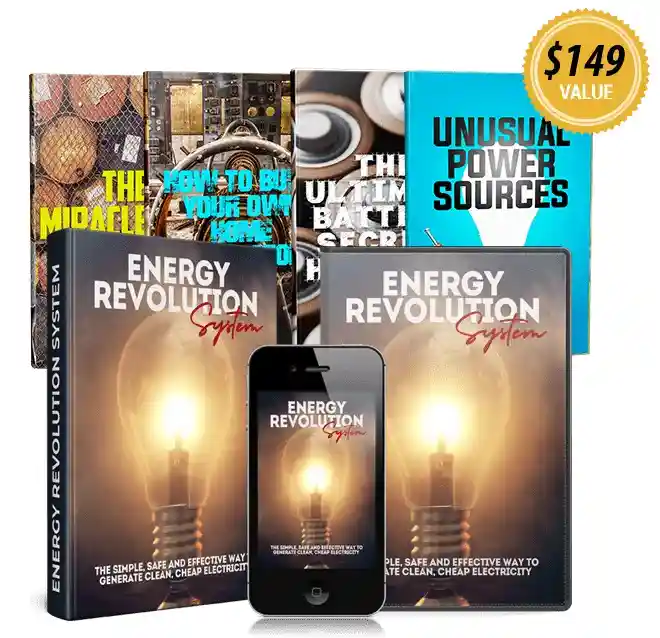
The Energy Revolution System
Detailed Energy Revolution System review covering real user experiences, cost savings, backup power capabilities, and honest pros/cons. Learn if this DIY system works for reducing electricity bills in 2026.
Introduction: The Growing Energy Crisis Facing American Households
Across the United States and Canada, households are confronting an unprecedented energy affordability crisis. According to the U.S. Energy Information Administration, residential electricity costs have surged dramatically, with average rates increasing by 6.8% nationally as of November 2025, reaching 13.43 cents per kilowatt-hour. Meanwhile, households now face average annual electricity expenditures exceeding $1,760, creating significant financial strain for millions of families.
Beyond rising costs, power reliability has become equally concerning. A comprehensive study from Texas A&M University’s Urban Resilience AI Lab reveals that weather-related power outages have increased by approximately 20% annually since 2019. Furthermore, research published by JD Power indicates that 45% of utility customers nationwide experienced power outages in the first half of 2025 alone, with the average longest outage duration climbing from 8.1 hours in 2022 to 12.8 hours by mid-2025.
These twin challenges—escalating electricity costs and deteriorating grid reliability—have driven unprecedented interest in alternative energy solutions. Among the options gaining attention is the Energy Revolution System, a digital DIY training program designed to help homeowners create supplemental power generation systems. However, separating legitimate capabilities from marketing hype requires careful analysis.
This comprehensive review examines the Energy Revolution System from multiple perspectives, analyzing real user experiences, technical capabilities, cost-benefit analysis, limitations, and practical applications to provide readers with the detailed information needed to make informed decisions.
Understanding What the Energy Revolution System Actually Is
Clarifying Common Misconceptions
The most fundamental misunderstanding surrounding the Energy Revolution System stems from expectations versus reality. This program is not a physical generator that arrives at your doorstep ready to power your home. Rather, it represents a comprehensive digital training system providing step-by-step instructions for building a small-scale, supplemental power generation setup using readily available materials.
The confusion often arises from promotional language that, while technically accurate, may lead consumers to envision turnkey solutions. Understanding this distinction is essential before purchase consideration.
What You Actually Receive
When purchasing the Energy Revolution System, customers gain access to:
- Comprehensive Digital Instructions: Detailed, beginner-friendly guides explaining each construction phase
- Visual Diagrams and Schematics: Clear illustrations reducing assembly errors and confusion
- Educational Content: Scientific explanations of underlying electromagnetic principles
- Safety Guidelines: Critical protocols for handling electrical components safely
- Troubleshooting Resources: Solutions for common challenges during construction
- Optimization Strategies: Techniques for maximizing power output within system limitations
The Scientific Foundation
The Energy Revolution System operates on electromagnetic induction, a well-established physical principle discovered by Michael Faraday in 1831. This same principle powers commercial generators, electric motors, and transformers worldwide. The system essentially teaches users to create a simplified version of these devices using affordable components.
The process involves:
- Creating coil assemblies from copper wire and magnetic materials
- Inducing electrical current through magnetic field interaction
- Stabilizing and directing generated electricity to small devices
- Implementing basic safety mechanisms to prevent electrical hazards
While the science is sound, the scale and output remain modest compared to commercial generators or renewable energy installations.
The Current State of U.S. Electricity Costs: Why People Are Seeking Alternatives
Recent Price Escalation Patterns
The financial motivation driving interest in alternative energy solutions becomes clear when examining recent electricity cost trends. According to data from the Federal Reserve Bank of St. Louis, the Consumer Price Index for electricity reached 300.167 in December 2025, reflecting substantial increases compared to historical baselines.
Research from Resources for the Future indicates that electricity affordability has become a top policy concern, with nearly 25% of U.S. households and one-third of homes with children struggling to afford their energy bills in 2024. This affordability crisis extends beyond absolute price increases to encompass the relationship between electricity costs and household income.
Regional Disparities in Electricity Pricing
National averages mask significant regional variations that influence consumer interest in supplemental power solutions:
Highest-Cost States (2025-2026 data):
- Hawaii: 42.49¢/kWh (residential)
- Connecticut: Average monthly bills exceeding $220
- California: Rates approaching 20¢/kWh in many service territories
Lowest-Cost States:
- Idaho: 11.69¢/kWh (residential)
- North Dakota: 7.41¢/kWh (commercial)
- Utah: Average monthly bills around $94
According to the Center for American Progress, at least 222 electric and natural gas utilities have implemented or proposed rate increases between 2025 and 2027, affecting over 108 million electric utility customers and nearly 49 million natural gas customers across 49 states and Washington, D.C.
Factors Driving Price Increases
Multiple interconnected factors contribute to rising electricity costs, as documented by the U.S. Energy Information Administration:
- Infrastructure Modernization: Aging electrical grid requiring substantial capital investment for upgrades and repairs
- Extreme Weather Impacts: Climate-related damage necessitating expensive recovery and hardening measures
- Rising Demand: Increasing electricity consumption from data centers, electric vehicles, and electrification of heating
- Fuel Cost Fluctuations: Natural gas and coal price volatility affecting generation costs
- Regulatory Compliance: Environmental standards requiring investments in cleaner generation technologies
These persistent upward pressures make electricity affordability a long-term concern rather than a temporary phenomenon, explaining sustained consumer interest in supplemental power solutions like the Energy Revolution System.
Power Outage Trends: The Reliability Crisis Driving Backup Power Interest
Frequency and Duration Statistics
Beyond cost considerations, power reliability concerns significantly influence consumer interest in backup power solutions. According to Utility Dive’s analysis of JD Power’s U.S. Electric Utility Residential Customer Satisfaction Study, the average duration of the longest power outage has increased across all regions since 2022, climbing from 8.1 hours to 12.8 hours by mid-2025.
Regional variations reveal dramatic disparities in outage experiences:
- Southern United States: Average longest outages reaching 18.2 hours
- Western United States: Average longest outages at 12.4 hours
- Nationwide Average: Customer outage frequency averaging 1.4 occurrences annually with total duration around 5.6 hours
Research from Eaton indicates that weather-related events cause approximately 83% of all power outages, with severe weather outages occurring significantly more frequently than a decade ago.
Geographic Vulnerability Patterns
Data from the Power System Vulnerability Index (PSVI), developed by Texas A&M University’s Urban Resilience AI Lab, provides the first comprehensive, county-level assessment of grid vulnerability nationwide. Analysis of over 179 million data points from 2014-2023 reveals:
Highest-Risk Regions:
- Coastal areas vulnerable to hurricanes
- Great Lakes region experiencing severe winter storms
- Gulf Coast states facing tropical weather systems
- Regions with extensive forested areas susceptible to falling tree damage
State-Level Analysis:
- Texas experienced 263 power outages over five years, averaging 160.4 minutes each and affecting approximately 172,000 residents per incident
- California faced numerous disruptions from wildfires and heatwaves
- Florida endured frequent hurricane-related outages
Future Reliability Projections
Perhaps most concerning, a July 2025 Department of Energy report warns that blackout hours could increase 100-fold by 2030 due to the convergence of several critical factors:
- Demand Growth: Electricity consumption from AI data centers and industrial facilities potentially doubling by 2030
- Supply Reduction: Approximately 104 gigawatts of baseload generation capacity scheduled for retirement with only 22 gigawatts of replacement capacity planned
- Renewable Intermittency: Growing reliance on weather-dependent generation sources creating new reliability challenges
- Grid Modernization Delays: Infrastructure upgrades lagging behind evolving system requirements
These projections underscore why many households view backup power capabilities as increasingly essential rather than merely convenient.
How the Energy Revolution System Works: Technical Overview
Core Operating Principles
The Energy Revolution System teaches users to construct a device based on electromagnetic induction, converting mechanical energy into electrical energy through magnetic field interaction. While the underlying physics are complex, the practical application remains accessible to motivated individuals without advanced technical backgrounds.
Basic Operational Sequence:
- Magnetic materials create persistent magnetic fields
- Coil assemblies positioned within these fields
- Relative motion between magnets and coils induces electrical current
- Generated alternating current (AC) can be used directly or converted to direct current (DC)
- Voltage regulation ensures safe, stable power delivery to connected devices
Construction Materials and Components
One advantage cited by users is the accessibility of required materials. According to program documentation, most components can be sourced from:
- Hardware stores (wire, mounting materials, fasteners)
- Electronics suppliers (wire, magnets, connectors)
- Online retailers (specialized components)
- Recycling facilities (repurposed materials for budget-conscious builders)
Total material costs typically range from $50 to $200 depending on:
- Size of system being constructed
- Quality of components selected
- Availability of recycled or repurposed materials
- Geographic location affecting shipping and local pricing
Assembly Process and Time Investment
Realistic time estimates for system completion vary considerably based on individual factors:
Beginner Builders: 6-12 hours across multiple sessions Experienced DIY Enthusiasts: 4-6 hours of focused work Complex Configurations: 12-20 hours for expanded capacity designs
The Energy Revolution System emphasizes methodical, careful construction over speed, with safety checks integrated throughout the assembly process.
Visit to Energy Revolution System Official Page >>>
Real User Experiences: What Customers Actually Report
Positive Feedback Patterns
Analysis of verified customer reviews across multiple platforms reveals several consistent positive experiences:
Successful Backup Power Applications: Many users report successfully powering essential devices during outages, particularly:
- LED lighting systems for emergency illumination
- Smartphone and tablet charging maintaining communication capabilities
- Wi-Fi routers ensuring internet connectivity
- Small fans for air circulation during hot weather
- Emergency radios for weather and news updates
Educational Value: A significant percentage of positive reviews emphasize learning outcomes rather than purely practical applications. Users appreciate:
- Demystification of electrical generation principles
- Increased confidence in handling basic electrical projects
- Better understanding of household energy consumption
- Foundation for potentially expanding into larger renewable energy systems
Construction Quality and Instructions: Positive reviewers consistently highlight:
- Clear, well-organized instructional materials
- Visual diagrams reducing confusion and errors
- Logical progression through construction phases
- Responsive customer support when questions arise
Mixed and Neutral Feedback
Moderate reviews typically acknowledge both strengths and limitations:
Performance Expectations: Users with realistic expectations report satisfaction, while those anticipating whole-home backup power express disappointment. The system performs as designed for small-scale applications but cannot replace grid electricity for typical household demands.
Construction Challenges: Some users note:
- Requirement for patience and attention to detail
- Learning curve for those with minimal DIY experience
- Need for basic tools not included with purchase
- Variation in output quality depending on construction precision
Cost-Benefit Calculations: Mixed reviews often reflect uncertainty about long-term value:
- Modest electricity bill reductions difficult to quantify precisely
- Initial time investment substantial relative to immediate savings
- Value perception heavily influenced by personal priorities (preparedness, education, independence)
Negative Feedback Analysis
Critical reviews predominantly stem from several identifiable issues:
Expectation Mismatches: The most common complaints involve:
- Anticipating plug-and-play generators rather than DIY construction projects
- Expecting whole-home power capabilities beyond system design specifications
- Misunderstanding the supplemental versus replacement nature of power generation
Marketing Concerns: Some users criticize:
- Promotional language perceived as exaggerated or misleading
- Emphasis on benefits without adequate limitation disclosure
- Price perception relative to commercial alternatives
Performance Limitations: Realistic but disappointing observations include:
- Output insufficient for air conditioning, heating, or large appliances
- Inability to eliminate electricity bills as some marketing suggested
- Weather-dependent performance for certain configurations
Overall Satisfaction Patterns
Aggregating feedback across platforms reveals satisfaction correlates strongly with:
- Pre-purchase research and realistic expectations
- Interest in learning and skill development
- Preparedness priorities over cost savings
- Willingness to invest time in careful construction
- Understanding of system limitations before purchase
Realistic Power Output: What Can You Actually Run?
Device Compatibility Analysis
Based on user testing and program specifications, the Energy Revolution System typically generates sufficient power for:
Highly Compatible Devices (Consistently Successful):
- LED light bulbs (3-15 watts each)
- Modern smartphones (5-10 watts during charging)
- Tablets and e-readers (10-15 watts)
- Wi-Fi routers and modems (10-20 watts)
- USB-powered devices (2.5-15 watts)
- Small DC fans (5-25 watts)
- Emergency weather radios (1-5 watts)
Moderately Compatible Devices (Depends on Configuration):
- Laptop computers (30-60 watts)
- Small televisions (30-100 watts)
- Cordless tool chargers (25-50 watts)
- CPAP machines (30-60 watts)
Incompatible Devices (Beyond System Capabilities):
- Air conditioning units (1,000-4,000+ watts)
- Electric heaters (750-1,500+ watts)
- Refrigerators and freezers (100-800 watts continuous, higher startup)
- Washing machines and dryers (500-5,000 watts)
- Kitchen appliances (toasters, microwaves, ovens: 600-1,500+ watts)
- Well pumps (300-1,000+ watts)
Calculating Realistic Capacity
User reports suggest typical system output ranges between 50-150 watts continuous power, with variations based on:
- Construction quality and precision
- Component selection and specifications
- Environmental factors (temperature, humidity)
- System configuration and optimization
To calculate simultaneous device usage:
- Sum wattage requirements of desired devices
- Include 20% safety margin for efficiency losses
- Compare total to system capacity
- Prioritize essential devices if exceeding capacity
Example Scenario:
- LED bulbs (3 × 10W = 30W)
- Smartphone charging (10W)
- Wi-Fi router (15W)
- Emergency radio (5W)
- Total: 60W + 20% margin = 72W effective load
This load falls well within typical system capabilities, enabling sustained operation of essential communication and lighting during outages.
Expansion Possibilities and Limitations
While the Energy Revolution System can be expanded or scaled, practical limitations include:
- Diminishing returns on additional construction time
- Increased complexity of parallel system coordination
- Safety considerations with higher power outputs
- Material costs approaching commercial generator prices at larger scales
Most users find optimal value in the 50-150 watt range rather than pursuing extensive expansion projects.
Energy Bill Impact: Realistic Savings Expectations
Cost Reduction Potential
The critical question for many prospective buyers centers on electricity bill savings. Honest analysis requires separating theoretical possibilities from practical realities.
Theoretical Maximum Savings: If operating continuously at 100 watts capacity:
- Daily generation: 100W × 24 hours = 2.4 kWh
- Monthly generation: 2.4 kWh × 30 days = 72 kWh
- Annual generation: 72 kWh × 12 months = 864 kWh
At national average electricity rates (approximately 16.37¢/kWh as of January 2026):
- Monthly savings: 72 kWh × $0.1637 = $11.79
- Annual savings: 864 kWh × $0.1637 = $141.44
Realistic Practical Savings: Actual results depend heavily on usage patterns:
- Supplemental Usage (3-6 hours daily): $3-6 monthly savings
- Peak Hour Replacement (2-4 hours during high-rate periods): $5-10 monthly savings (in time-of-use rate structures)
- Weekend/Intermittent Use: $1-3 monthly savings
Break-Even Analysis
Calculating return on investment requires considering:
Initial Investment:
- Material costs: $50-200
- Time investment: 6-12 hours (valued at $0 to $180 at $15/hour opportunity cost)
- Total initial expense: $50-380
Operating Costs:
- Maintenance: Minimal ($5-10 annually)
- Replacement parts: Occasional ($10-30 every few years)
Break-Even Timeline:
- Materials-Only Calculation: 4-17 months for material costs alone
- Including Time Value: 2-7 years if valuing construction time
- Educational Value Adjustment: Immediate if prioritizing learning over savings
Factors Affecting Bill Impact
Several variables significantly influence actual savings:
- Local Electricity Rates: Higher rates increase savings proportionally
- Usage Patterns: Consistent daily use maximizes benefit
- Time-of-Use Rates: Strategic deployment during expensive peak hours enhances savings
- System Efficiency: Construction quality affects output consistency
- Device Selection: Powering high-efficiency devices maximizes effective savings
Realistic Expectations Statement
The Energy Revolution System should not be purchased primarily as a bill reduction strategy if seeking substantial immediate savings. More appropriate motivations include:
- Emergency backup power capability
- Educational experience and skill development
- Incremental supplemental power generation
- Foundation for future renewable energy exploration
- Personal satisfaction from energy independence efforts
Those seeking significant electricity bill reductions should consider:
- Professional solar panel installations
- Comprehensive home energy efficiency improvements
- Heat pump installations replacing less efficient HVAC systems
- Smart home automation optimizing consumption patterns
Pricing Structure and Current Offers
Standard Pricing Model
The Energy Revolution System employs a straightforward pricing approach:
Base Package:
- One-time payment (no recurring subscription)
- Instant digital access upon purchase
- Lifetime access to materials and updates
- Typical price range: $37-67 (varies by promotional offers)
This represents considerably lower upfront investment compared to alternatives:
- Basic portable generators: $300-1,000
- Solar generator systems: $500-3,000
- Professional solar installations: $15,000-30,000
Bonus Materials and Add-Ons
Purchase often includes supplemental resources:
Standard Bonuses (Typically Included):
- Efficiency optimization guide
- Troubleshooting checklist
- Safety protocols documentation
- Basic electrical theory primer
- Customer support access
One-Time Offer (OTO) Upgrades: Following initial purchase, customers may receive optional upgrade offers:
- Advanced configuration designs
- Higher-output system variations
- Commercial-scale applications
- Video tutorial series
- Priority support access
Important Note: The OTO upgrades are completely optional. The base package provides everything necessary to construct a functional system. Upgrades primarily offer convenience and advanced applications rather than essential functionality.
Visit to Energy Revolution System Official Page >>>
Money-Back Guarantee
Most purchase offers include refund policies:
- 60-day money-back guarantee (standard)
- Full refund if unsatisfied with materials
- Refund eligibility regardless of reason
- Digital nature of product enables risk-free evaluation
Consumers should:
- Review specific guarantee terms before purchase
- Document any refund requests through proper channels
- Understand processing timelines and procedures
Price Comparison Analysis
Evaluating value requires comparing against alternatives:
Budget Backup Power Options:
- Portable power stations (100-500Wh capacity): $150-800
- Small gas generators (1,000-3,000W): $300-800
- Battery backup systems: $200-600
Advantages of Energy Revolution System:
- No fuel costs for operation
- Silent operation (no engine noise)
- Unlimited operating duration (weather permitting)
- Educational value and transferable skills
- Expandability without additional purchases
Advantages of Commercial Alternatives:
- Higher immediate power output
- Plug-and-play operation
- Consistent performance regardless of skill
- Professional support and warranties
Comprehensive Advantages and Limitations
Primary Benefits
1. Backup Power Capability The most tangible benefit involves maintaining essential device operation during grid outages. Users report successfully powering:
- Emergency lighting preventing dangerous navigation in darkness
- Communication devices maintaining contact with family and emergency services
- Medical devices like CPAP machines ensuring health and safety
- Information access through powered routers and computing devices
2. Educational Value Many satisfied customers emphasize knowledge gained:
- Understanding electricity generation principles
- Confidence tackling electrical projects
- Foundation for renewable energy exploration
- Critical thinking about energy consumption
3. Long-Term Cost Advantages While immediate savings remain modest:
- No ongoing fuel costs (unlike generators)
- Minimal maintenance requirements
- Unlimited operational lifespan with proper care
- Cumulative savings over 5-10 year timeframe
4. Environmental Considerations Eco-conscious users appreciate:
- Zero emissions during operation
- No fossil fuel combustion
- Renewable operation principles
- Foundation for sustainable living practices
5. Energy Independence Psychological and practical benefits include:
- Reduced grid dependency for essential needs
- Preparedness for emergency situations
- Self-sufficiency satisfaction
- Resilience against infrastructure failures
Significant Limitations
1. Power Output Constraints The fundamental limitation involves capacity:
- Cannot power whole-home electrical demands
- Insufficient for air conditioning or heating
- Unable to run major appliances
- Limited simultaneous device operation
2. Construction Requirements DIY nature creates barriers:
- Time investment of 6-12 hours minimum
- Basic tool requirements
- Attention to detail necessity
- Learning curve for inexperienced builders
3. Performance Variability Output depends on multiple factors:
- Construction precision and quality
- Component selection and specifications
- Environmental conditions
- User skill and experience level
4. Marketing vs. Reality Promotional materials sometimes create misconceptions:
- Emphasis on benefits without limitation disclosure
- Theoretical capabilities versus practical performance
- “Revolutionary” language for incremental technology
- Cost savings potentially overstated
5. Scalability Challenges Expanding capacity faces obstacles:
- Diminishing returns on additional units
- Complexity of parallel operation
- Safety considerations at higher outputs
- Cost approaching commercial alternatives
Who Should Consider the Energy Revolution System?
Ideal Candidate Profiles
Emergency Preparedness Enthusiasts: Individuals prioritizing backup power capability for essential devices during outages. Those who:
- Live in areas with frequent power disruptions
- Require continuous operation of medical devices
- Value communication capability during emergencies
- Want silent backup options avoiding generator noise
DIY Learning Advocates: People interested in hands-on education about electricity generation. Characteristics include:
- Enjoyment of building projects and skill development
- Interest in renewable energy and sustainable living
- Desire to understand rather than simply consume electricity
- Patience for methodical construction processes
Budget-Conscious Households: Families seeking affordable entry into supplemental power generation:
- Limited capital for solar installations
- Unwilling to invest in expensive generators
- Interested in incremental electricity bill reduction
- Willing to trade time for cost savings
Rural or Off-Grid Residents: Those living in locations with limited grid access:
- RV and van life enthusiasts
- Cabin owners with minimal electricity needs
- Homesteaders developing self-sufficiency
- Remote property owners lacking grid connections
Unsuitable Candidates
Immediate Whole-Home Power Seekers: Individuals expecting:
- Complete grid replacement capability
- Air conditioning and heating backup
- Whole-house electrical supply
- Instant, turnkey solutions
Time-Constrained Individuals: Those unable or unwilling to invest construction time:
- Extremely busy schedules
- Preference for plug-and-play solutions
- Unwillingness to follow detailed instructions
- Impatience with learning processes
High-Demand Power Users: Households requiring substantial electricity:
- Large appliance operation necessity
- Medical equipment exceeding system capacity
- Business operations depending on reliable power
- Critical infrastructure applications
Immediate ROI Expectations: Buyers seeking rapid financial returns:
- Expectation of dramatic monthly bill reductions
- Short-term payback period requirements
- Primary motivation being cost savings
- Unwillingness to value educational aspects
Visit to Energy Revolution System Official Page >>>
Addressing Common Complaints and Concerns
“It Doesn’t Power My Entire Home”
The Complaint: Numerous negative reviews express disappointment that the system cannot replace grid electricity for whole-home applications.
The Reality: This criticism reflects expectation misalignment rather than product failure. The Energy Revolution System was never designed or marketed as a whole-home power solution, though some promotional language may have created ambiguity.
Resolution: Prospective buyers must clearly understand:
- System designed for supplemental power generation
- Capacity appropriate for small devices only
- Backup capability limited to essential equipment
- Whole-home solutions require professional solar installations or large generators
“Marketing Feels Exaggerated”
The Complaint: Some customers criticize promotional materials as misleading or overpromising results.
The Reality: Marketing language sometimes emphasizes theoretical capabilities or ideal scenarios while minimizing practical limitations. Terms like “revolution,” “free energy,” and “eliminate bills” create unrealistic expectations.
Resolution: Consumers should:
- Research beyond promotional materials
- Seek independent reviews and user testimonials
- Understand typical versus optimal performance
- Recognize marketing hyperbole versus technical specifications
“Construction Takes Too Much Effort”
The Complaint: Users expecting simple assembly express frustration with the detailed construction process.
The Reality: The DIY nature is fundamental to the product’s affordability and value proposition. Professional alternatives cost 10-100 times more precisely because they eliminate construction requirements.
Resolution: Prospective buyers must honestly assess:
- Willingness to invest 6-12 hours of focused effort
- Comfort with detailed instructions and technical diagrams
- Patience for methodical, careful construction
- Interest in learning through hands-on building
“Results Vary Too Much”
The Complaint: Some users report inconsistent performance or output below expectations.
The Reality: As with any DIY project, results depend heavily on construction quality, component selection, and user skill. While instructions minimize variability, human error remains possible.
Resolution: Success requires:
- Careful attention to instruction details
- Quality component selection within budget
- Patience during construction process
- Willingness to troubleshoot and refine
- Understanding that DIY inherently varies from commercial products
Safety Considerations and Best Practices
Electrical Safety Fundamentals
Working with electrical systems, even small-scale DIY projects, requires respecting fundamental safety principles:
Essential Safety Protocols:
- Insulation Integrity: Ensure all wire connections are properly insulated to prevent shorts
- Voltage Awareness: Understand voltage levels and appropriate handling procedures
- Overload Protection: Implement fusing or circuit breakers preventing dangerous current levels
- Environmental Factors: Protect systems from moisture, extreme temperatures, and physical damage
- Grounding Requirements: Proper grounding prevents shock hazards
Construction Safety Guidelines
The Energy Revolution System includes safety guidance, but users should additionally:
During Assembly:
- Work in well-lit, organized spaces
- Use appropriate tools in good condition
- Disconnect any power sources before handling components
- Verify connections before energizing systems
- Test output with multimeter before connecting devices
During Operation:
- Monitor system temperature during initial operation
- Verify stable output before connecting valuable devices
- Implement automatic shutoff for overload conditions
- Keep system accessible for emergency disconnection
- Regularly inspect for wear or damage
When to Seek Professional Assistance
Despite beginner-friendly design, certain situations warrant professional consultation:
- Uncertainty about electrical safety procedures
- Integration with existing home electrical systems
- Building code compliance questions
- Permanent installation requirements
- Commercial or high-output applications
Safety should never be compromised for cost savings or convenience.
Comparison with Alternative Backup Power Solutions
Traditional Gas-Powered Generators
Advantages Over Energy Revolution System:
- Higher power output (1,000-10,000+ watts)
- Proven reliability for whole-home backup
- No construction required
- Consistent performance regardless of weather
Disadvantages vs. Energy Revolution System:
- Fuel costs during operation ($5-20/day)
- Loud operation (60-80+ decibels)
- Maintenance requirements (oil changes, tune-ups)
- Carbon monoxide hazards requiring outdoor placement
- Storage and handling of flammable fuel
Best For: Whole-home backup power, running large appliances, guaranteed performance
Solar Power Systems
Advantages Over Energy Revolution System:
- Higher power generation (1,000-10,000+ watts typical)
- Professional installation and warranties
- Significant long-term electricity bill reductions
- Tax incentives and rebates available
- Property value increases
Disadvantages vs. Energy Revolution System:
- High upfront costs ($15,000-30,000+)
- Installation complexity requiring professionals
- Roof or property modifications necessary
- Performance dependent on sun exposure
- Permit and approval processes
Best For: Long-term investment, significant bill reduction, whole-home renewable energy
Battery Backup Systems (UPS/Power Stations)
Advantages Over Energy Revolution System:
- Instant operation without construction
- Reliable, consistent performance
- Portable designs for flexibility
- Integrated safety features
- Multiple output options (AC/DC/USB)
Disadvantages vs. Energy Revolution System:
- Limited capacity (100-2,000 watt-hours typical)
- Expensive per watt-hour of storage
- Battery degradation over time
- Requires recharging from grid or solar
- Replacement costs after 3-10 years
Best For: Immediate backup needs, portability requirements, simple operation preferences
Energy Revolution System Competitive Position
The Energy Revolution System occupies a unique niche:
- Lowest upfront cost among backup power options
- Educational value unavailable from commercial products
- Unlimited operation without fuel or battery constraints
- Silent operation unlike generators
- Scalability at incremental cost
However, it sacrifices:
- Convenience of commercial products
- Guaranteed consistent performance
- High power output capability
- Professional support and warranties
Visit to Energy Revolution System Official Page >>>
Frequently Asked Questions
Is the Energy Revolution System legitimate or a scam?
The Energy Revolution System is a legitimate DIY training program based on established electromagnetic principles. However, some marketing language may create unrealistic expectations. The system can generate small amounts of supplemental power as described but cannot replace grid electricity for typical household needs.
Can the system really reduce my electricity bills?
Yes, but reductions typically remain modest—between $1-10 monthly depending on usage patterns and local electricity rates. Theoretical maximum savings approach $11-12 monthly with continuous optimal operation. The system should not be purchased primarily for immediate bill reduction.
How much power does the system actually generate?
Typical user-built systems generate between 50-150 watts continuous output, sufficient for LED lighting, small electronics charging, routers, and similar low-power devices. Output varies based on construction quality, component selection, and environmental factors.
Do I need electrical experience to build this?
No advanced electrical knowledge is required. The program provides beginner-friendly instructions with detailed diagrams. However, basic DIY skills, patience, and attention to detail significantly improve success probability. Those completely uncomfortable with hands-on projects may struggle.
How long does construction take?
Most users report 6-12 hours total construction time across multiple sessions. Experienced DIY enthusiasts may complete assembly in 4-6 hours, while beginners or those choosing complex configurations might require 12-20 hours.
Is the one-time offer (OTO) upgrade necessary?
No, the OTO upgrades are completely optional. The base package includes everything necessary to construct a functional system. Upgrades provide advanced configurations, video tutorials, and convenience features but aren’t required for basic operation.
Can I expand the system for more power?
Yes, the system can be scaled by building additional units or larger configurations. However, practical limitations include diminishing returns on time investment, increased complexity, safety considerations at higher outputs, and costs approaching commercial alternatives.
What happens if the system doesn’t work for me?
Most purchases include a 60-day money-back guarantee allowing full refunds if unsatisfied with the materials for any reason. Buyers should verify specific guarantee terms with their purchase and follow proper refund request procedures.
How does this compare to solar panels?
Professional solar installations provide significantly higher power output (typically 1,000-10,000+ watts) and can substantially reduce or eliminate electricity bills. However, they require $15,000-30,000+ upfront investment versus $37-67 for the Energy Revolution System. Solar offers better long-term value for those able to afford initial costs.
Is the system safe to operate?
When constructed following provided safety guidelines, the system operates safely within designed parameters. Users must respect basic electrical safety principles including proper insulation, appropriate wire sizing, overload protection, and moisture prevention. Those uncertain about safety procedures should consult professionals.
Final Verdict: Is the Energy Revolution System Worth It?
Summary of Key Findings
After comprehensive analysis incorporating user experiences, technical specifications, cost-benefit calculations, and comparison with alternatives, several clear conclusions emerge:
What the System Does Well:
- Provides affordable introduction to supplemental power generation
- Delivers genuine educational value about electricity principles
- Creates legitimate backup power for small, essential devices
- Operates silently without fuel costs or emissions
- Offers expandability at incremental cost
Where the System Falls Short:
- Cannot power whole-home electrical demands
- Requires significant time investment for construction
- Marketing sometimes creates unrealistic expectations
- Output varies based on construction quality
- Bill savings remain modest rather than transformative
Who Will Find Value
The Energy Revolution System represents excellent value for:
- Emergency preparedness advocates prioritizing backup power for essential devices
- Educational enthusiasts interested in hands-on learning about electricity generation
- Budget-conscious individuals seeking affordable entry into supplemental power
- DIY hobbyists enjoying construction projects and skill development
- Rural/off-grid residents with modest power requirements
Who Should Look Elsewhere
Alternative solutions better serve:
- Whole-home backup seekers requiring substantial power output
- Time-constrained individuals preferring plug-and-play convenience
- High-demand users needing air conditioning, heating, or major appliance operation
- Immediate ROI seekers expecting rapid financial returns
- Those uncomfortable with DIY requiring professional installation
Recommendation Based on Current Energy Landscape
Given the documented trends in electricity costs—with rates increasing 6.8% nationally and households facing average annual expenditures exceeding $1,760—combined with deteriorating grid reliability evidenced by 45% of customers experiencing outages in 2025’s first half, the value proposition of backup power capability has strengthened considerably.
For individuals meeting the ideal candidate profile and maintaining realistic expectations, the Energy Revolution System offers a low-risk, educational approach to addressing these dual challenges. The modest upfront investment ($37-67), complete money-back guarantee, and unlimited operating duration create favorable risk-reward dynamics.
However, those seeking substantial immediate bill reductions or whole-home backup power should seriously consider professional solar installations (for long-term savings) or commercial generators (for reliable backup), despite significantly higher costs.
Visit to Energy Revolution System Official Page >>>
Final Recommendations
Purchase if:
- Primary motivation is backup power for essential devices
- Interested in educational experience and skill development
- Willing to invest 6-12 hours in careful construction
- Comfortable with supplemental versus replacement power generation
- Budget constraints prevent more expensive alternatives
Avoid if:
- Expecting whole-home power replacement
- Requiring immediate, substantial bill reductions
- Unwilling to engage in DIY construction
- Need guaranteed consistent performance
- Able to afford and willing to invest in professional solar installations
The Energy Revolution System represents neither a miracle solution nor a scam—rather, it’s a legitimate educational product that can provide genuine value when approached with appropriate expectations and realistic understanding of capabilities and limitations.